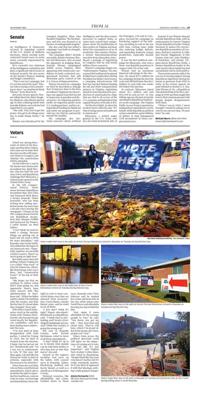

Warner cruises to 4th Senate term, promises 'an untethered Mark Warner'
ALEXANDRIA 鈥斅燯.S. Sen. Mark Warner cruised to reelection to a fourth term on Tuesday with a double-digit victory over Republican Bert Mizusama, who didn't have the money or name recognition to compete against the popular former governor in an election seen as a referendum on President Donald Trump in a political environment favoring Democrats.
The election didn't take long to call, as Warner took a big lead even as Virginia polls closed at 7 p.m.
He led by more than 20 percentage points less than an hour into the vote count, winning big in Northern Virginia and urban areas, but also in rural localities such as Pittsylvania and Brunswick counties in rural Southside and Accomack County on the Eastern Shore.
"Have you ever seen an election called at 6:59 p.m.?" House Speaker Don Scott, D-Portsmouth, joked at the senator's victory party in Alexandria.
As of 9:15 p.m., he held a 59.5% to 40.2% of the vote lead, according to unofficial results.聽
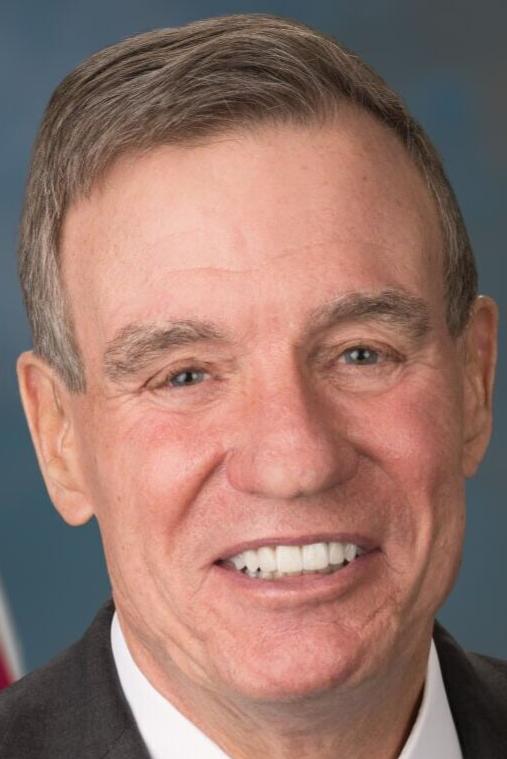
Warner
Warner, 71, has said this election would be his last. However, he may have the opportunity to reclaim the chairmanship of the Senate Select Committee on Intelligence if Democrats succeed in regaining control of the U.S. Senate in midterm elections, which include hotly contested Senate races in seven states currently represented by Republicans.
He's currently vice chairman of the intelligence committee and plays a significant role in issues of national security. He also serves on the Senate's finance, banking and budget committees.
"This is my last campaign, but it's not the end of the road," Warner told a roaring crowd, promising to show "an untethered Mark Warner" in his final term.
But in his victory speech, Warner talked about his oldest daughter, Madison, who died in April at age 36 after a lifelong battle with juvenile diabetes and said she had urged him to run again.
"She said, 'Dad, you've got the power. You get to do things every day to make things better,'" he said.
Warner was introduced by his youngest daughter, Eliza, who thanked Virginians "for the kindness and love you showed us in the face of unimaginable tragedy."
She also said that her father's campaign "was built on strength, not negativity."
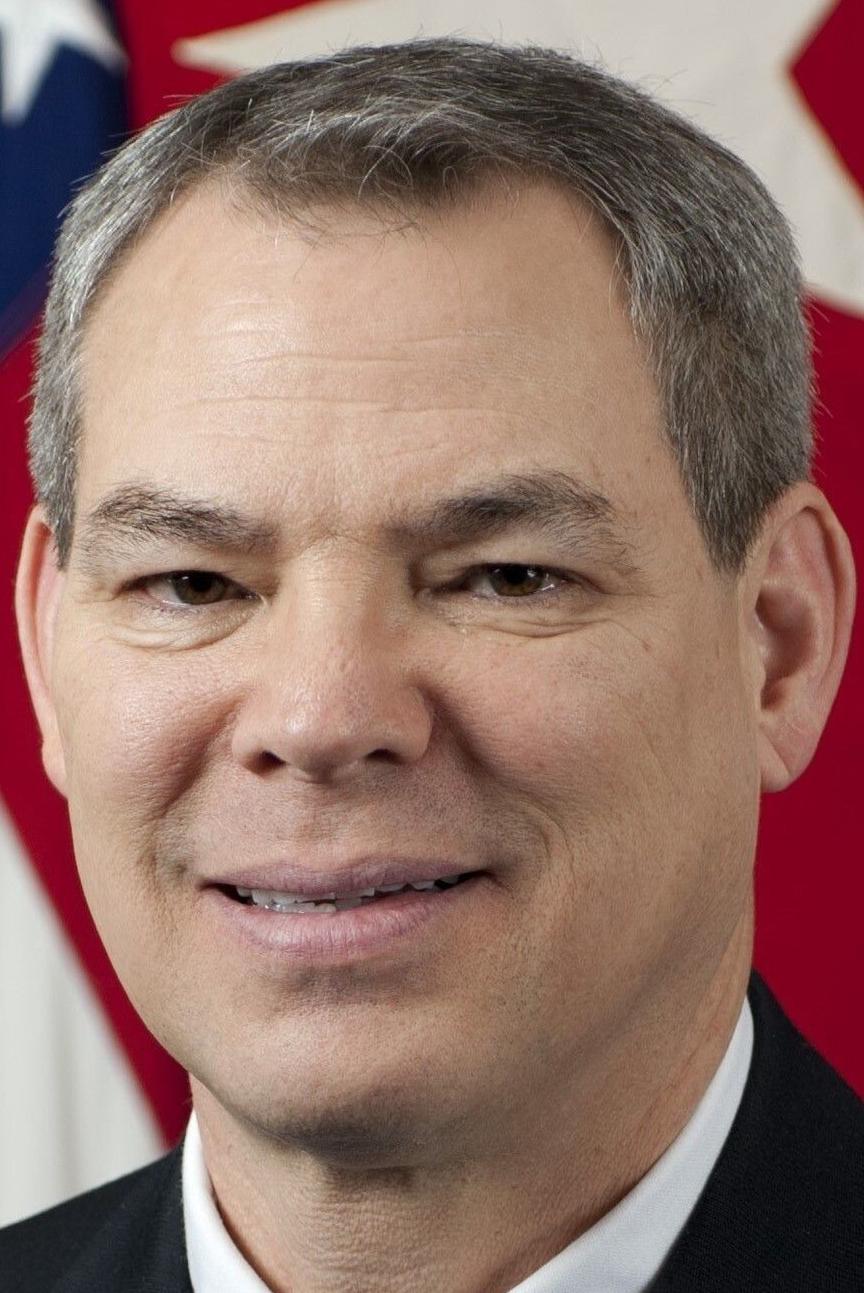
Mizusawa
The campaign didn't include any public debates between Warner and Mizusawa, who accused his opponent of dodging them. Instead, Warner campaigned widely across Virginia, often appearing with Democratic candidates in hotly contested congressional elections that will determine party control of the U.S. House of Representatives.
Warner focused his campaign on what he described as damage that Trump has done to the lives of ordinary Virginians by launching a war against Iran that has led to sharp rises in gasoline and diesel prices, by imposing punitive tariffs on imported goods from U.S. trading partners, and by cutting federal funding for Medicaid and safety net programs to provide tax cuts that he said mostly benefit the wealthy.
His campaign also featured concerns about artificial intelligence and the data centers necessary to support them, as voters have voiced their unhappiness about the proliferation of data centers in Virginia and fears about the consequences of an AI revolution. This summer, Warner, a former telecommunications executive from Alexandria, introduced a package of legislation in Congress that he said would address those concerns.
Warner's campaign slogan was "Delivering for Virginia." He cites as proof the leading role he played in bipartisan compromises during President Joe Biden's term to pass a sweeping infrastructure bill that has boosted federal funding for rail and other transportation projects in Virginia, legislation aimed at restoring domestic production of semiconductor chips that are vital to all sectors of the U.S. economy and legislation that capped the price of insulin at $35.
On Election Night, he drew the loudest cheers when he said, "It's time to bring universal healthcare to Americans."
Mizusawa, a retired major general in the U.S. Army who has also held prominent jobs at the Pentagon, CIA and in Congress, focused his campaign on bolstering support of the military, including its role in the war with Iran; cutting taxes while also reducing budget deficits; and expanding domestic energy production, especially nuclear power.
It was the first political campaign for Mizusawa, who won a three-way Republican primary in August with 51% of the vote.
Warner had an enormous financial advantage in the election. He raised $27.5 million for his campaign during the election cycle and still held more than $6.2 million in cash with two weeks left before the election.
In contrast, Mizusawa raised about $1.1 million and had $152,394 in cash on Oct. 14. One telltale sign was the lack of outside spending by Republican fundraisers on his campaign. The Virginia Public Access Project reported no independent expenditures on his behalf, while Republican political action committees spent millions of dollars to help beleaguered GOP incumbents in three congressional races.
Instead, it was Warner who got outside Republican help, with an endorsement by former Virginia Senate Republican leader Tommy Norment, R-James City; two former Republican members of Congress, Barbara Comstock, R-10th, and Denver Riggleman, R-5th; former state Sen. John Watkins, R-Powhatan; and former Virginia Beach Sheriff Ken Stolle, a former Republican leader in the state Senate whose family has had a prominent role in state politics.
Those endorsements reflect his success in wooing support among Republican legislators during his tenure as governor from 2002 to 2006. In his victory speech, he paid tributed to former U.S. Sen. John Warner, R-Va., a Republican who defeated him in his first campaign in 1996 and then taught him how to find common ground with people despite disagreements with them.
"When I ran in 1996, I never thought I would be asking you to vote for me one last time, 30 years later," he said.
Michael Martz (804) 649-6964